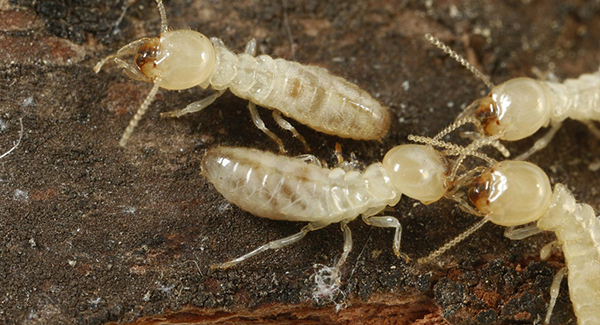
Termites can cause extensive damage to buildings, timber and other structures, often remaining undetected until significant damage has occurred. Effective termite management focuses on preventing infestations and controlling existing termite activity.
1. Chemical Soil Barrier Treatment:
This method involves applying a registered termiticide to the soil surrounding or beneath a building to create a protective barrier against subterranean termites. Treatments can be carried out during construction or around existing structures, depending on the property’s requirements.
2. Termite Baiting Systems:
Termite baiting involves placing specially designed bait stations in areas where termites are likely to forage. Worker termites consume the bait and transfer it throughout the colony, helping to reduce or eliminate termite populations over time.
The most suitable treatment depends on the termite species, the extent of the infestation and the surrounding environment.
TYPES OF TERMITES
Harvester termites
The Hodotermitidae are a basal Old World family of termites known as the harvester termites. They are distinguished by the serrated inner edge of their mandibles, and their functional compound eyes which are present in all castes.
Scientific name: Hodotermitidae
Subterranean Termites
Tetramorium immigrans—also known as the immigrant pavement ant, pavement ant, and the sugar ant in parts of North America—is an ant native to Europe, which also occurs as an introduced pest in North America. Its common name comes from the fact that colonies in North America usually make their nests under pavement.